Empower your bursary team to model unlimited scenarios, adjust forecasts with a familiar Excel-style grid, control permissions and publishing through robust status management, and collaborate seamlessly using interactive dashboards with line-item commenting.
Unlimited scenarios
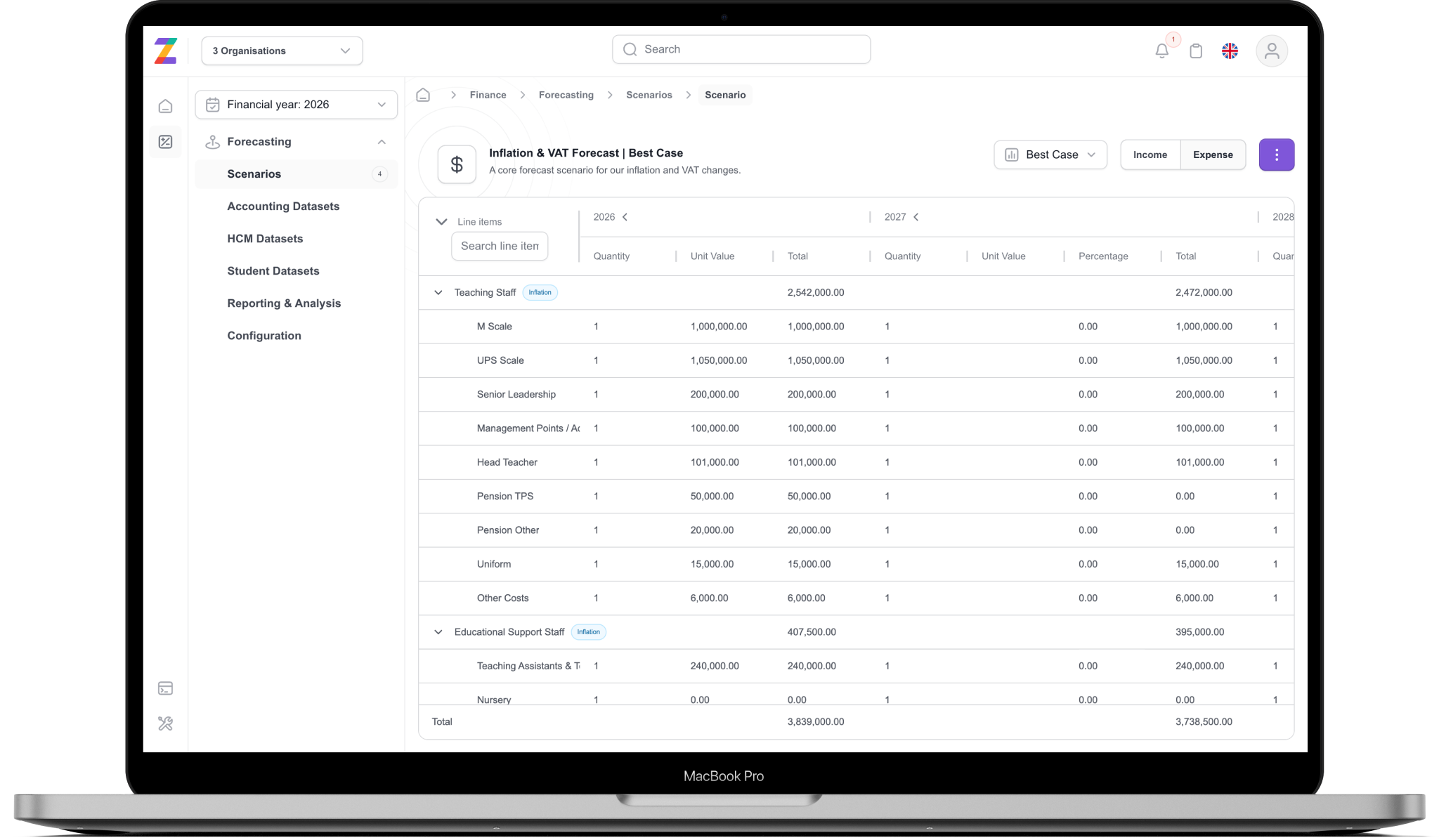
Build unlimited, reusable forecast scenarios that simplify even the most complex modeling.
Excel-inspired grid
Each scenario can be quickly adjusted and refined within a familiar, efficient Excel-style grid.
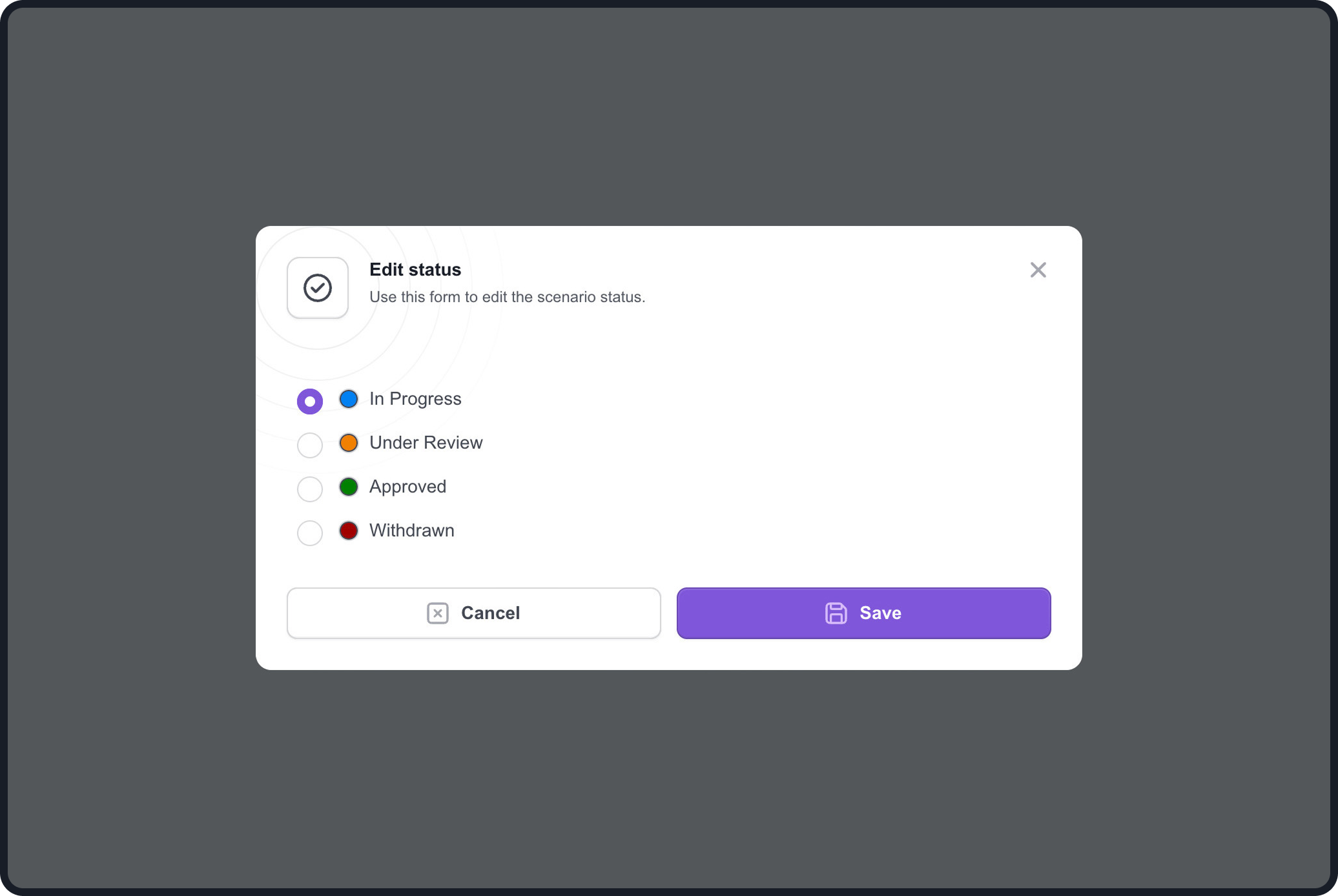
Status management
Manage permissions and publication options effortlessly with robust status controls for every scenario.
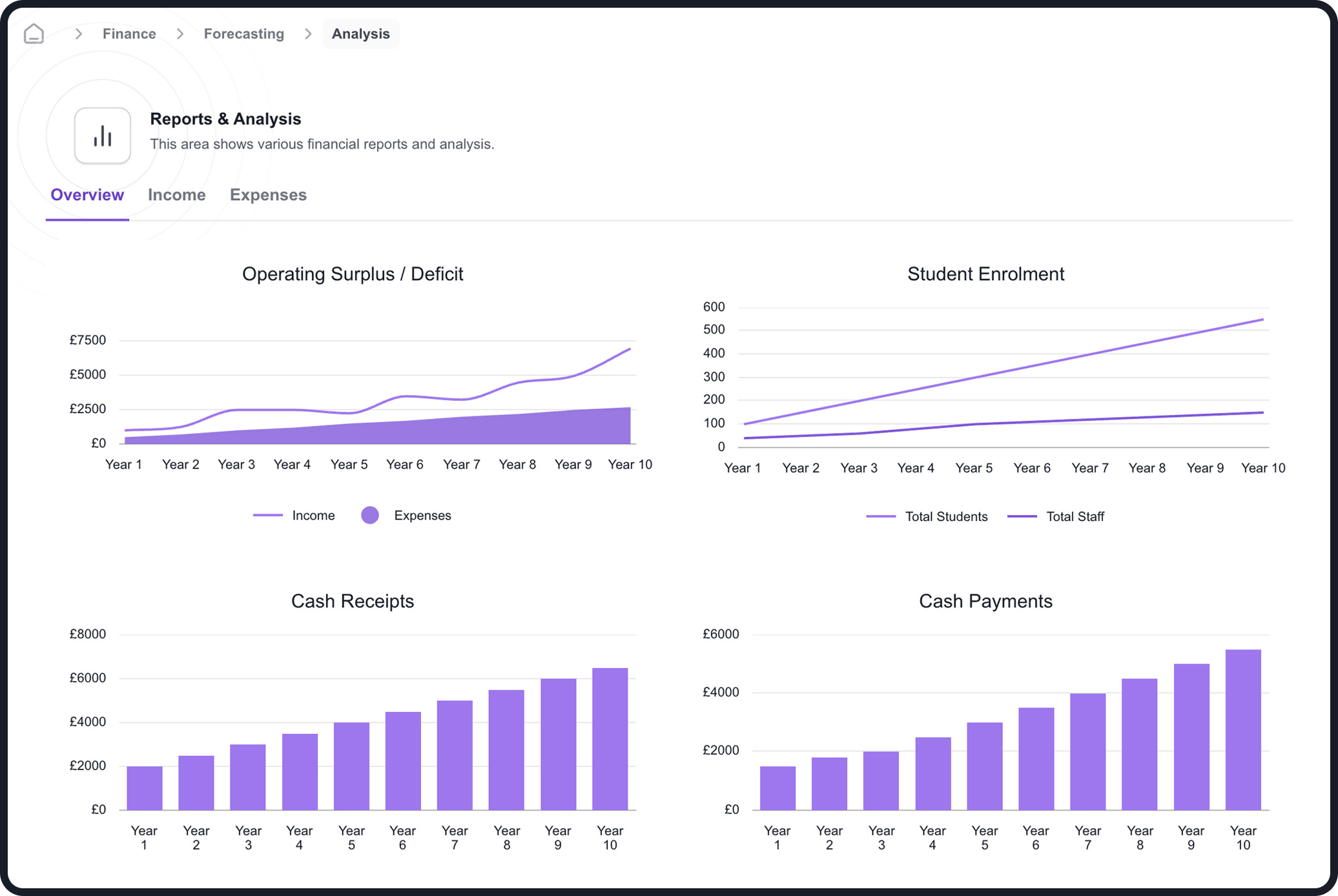
Collaboration
Foster collaboration with interactive dashboards and the ability to comment down to the line-item level.
Datasets
Accurate forecasting powered by integrated data
Gain complete financial visibility by syncing real-time accounting, HR, MIS and other external data to ensure accurate, up-to-date forecasting.
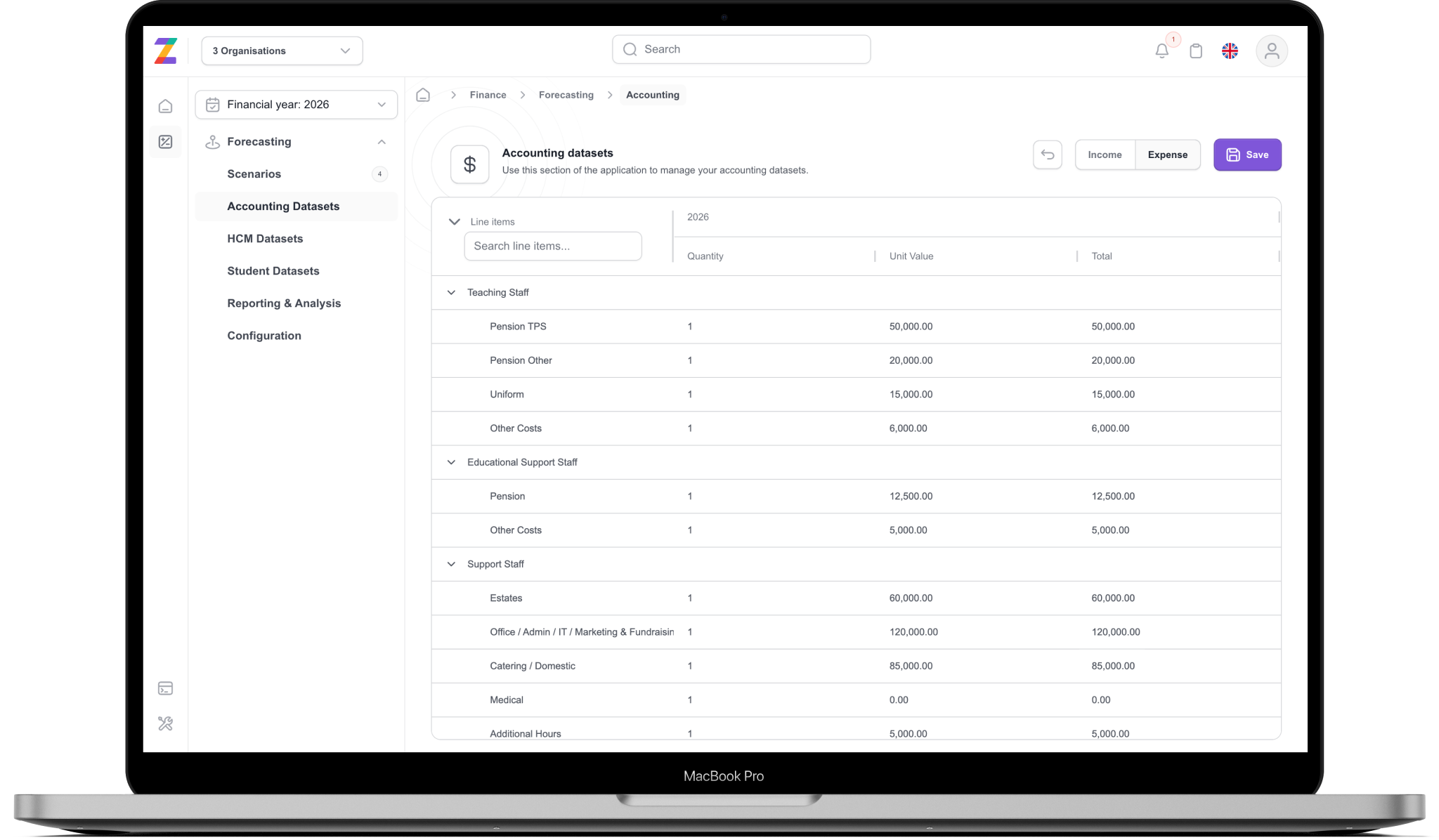
Accounting data
Gain complete financial visibility by syncing real-time, line-by-line accounting data from your accounting system.
Staff costs
Ensure precise staffing salary and pension projections by integrating directly with your HR system.
Student numbers
Automatically sync student numbers and admissions figures from your MIS for accurate, up-to-date forecasting.
Other data
Support wider visibility by connecting and syncing data from any external source using our advanced integration engine.
Configuration
Shared configuration
To accelerate implementation and improve accuracy, the forecasting module uses a shared configuration model, allowing all properties to be reused and shared across scenarios.
Create unlimited scenario types to capture alternative plans from best and worst
Build custom status types to manage permissions and publication
Save time and improve accuracy by defining reusable income, expense groups and line items
Deal with template based properties such as inflation and interest
All export and import processes can be saved and templated
Groups and international schools
Features for complex groups and international schools
From day one, the forecasting module has been designed to meet the needs of complex school groups and international schools, covering essential areas such as data hierarchies, permissions, multi-currency support and decimal precision.
Scenario rollup
Custom horizontal and vertical groupings roll scenarios up into clear, summarised forecasts for users at every level, with built-in permissions, sharing and collaboration.
Multi-currency
Scenarios support multiple currencies with unlimited decimal precision. Schools and sub-groups define their own exchange rates or use centrally managed group rates.
Multilingual
The Zeffer interface is fully multilingual, enabling schools in different regions to use the platform in their preferred language. Any language data can be reported on.
Permissions
Every action is fully audited, ensuring all inputs and access requests are recorded. Permissions are centrally managed at any level of the group or individual hierarchy.
Support
Frequently asked questions
Everything you need to know about our forecasting product.
Can the system model changes in student numbers and enrolment trends?
Yes. The system allows forecasting by year group, admissions year and attrition rates. It can model scenarios such as reduced intake, higher retention or demographic shifts and immediately show the impact on fee income and staffing requirements.
Is the system suitable for multi-year strategic planning?
Yes. The system is designed for 2-to-10-year forecasting, making it suitable for strategic planning, capital projects, and long-term sustainability discussions. It helps governors understand whether current decisions support the school’s long-term financial health.
How does it handle staffing costs, which are our largest expense?
Staffing costs can be modelled in detail, including salaries, on-costs, pension contributions and planned changes. The system allows the bursar to test scenarios such as adding posts, restructuring departments or applying different pay awards to see the long term financial implications.
How does this integrate with our existing finance or MIS systems?
The forecasting system does not replace the finance or MIS system. Instead, it complements them by using summary data (such as student numbers and actual costs) to build forward-looking models. Data can typically be imported via spreadsheets, reducing manual input.
How much time will it take to maintain?
Once set up, ongoing maintenance is minimal. Most schools update forecasts termly or annually. Adjusting assumptions is quick, allowing the bursar to respond rapidly to questions from the head, governors, or finance committee.
Start your free trial
Can’t find the answer you’re looking for? Please chat to our friendly team.